
By Sem Grijpink · 26 January 2026 · 6 min read
Living on the Costa del Sol: the pros and cons
The Costa del Sol is known for sun, sea, and a relaxed lifestyle, but a move is more than a postcard. We've guided buyers through this step for years, and we see both what makes people happy here and what catches them off guard. Here's an honest overview.
The advantages
The climate is the most commonly cited reason, and rightly so: more than 300 sunny days a year and mild winters make it pleasant to live here year round, not just in summer. The international community is large and well organised, with residents from across Europe who've lived here for years.
Málaga Airport is centrally located with direct connections to dozens of European cities, so you can be back home in two to three hours. Property values have risen structurally over the past ten years, and the cost of living remains lower than at home in many respects.
What to watch out for
Language and bureaucracy are the biggest hurdle for many buyers. Spanish institutions work differently from Dutch ones: more on paper, less online, and at their own pace. Without good guidance, an NIE application, a tax return, or a renovation permit can easily take longer than expected.
In the most popular towns, such as Marbella and Puerto Banús, high season gets very busy, with traffic and packed terraces. Those seeking calm often choose a quieter area such as Estepona or Benahavís on purpose. And although the flight time to the Netherlands is short, it's still a move: family and friends are no longer around the corner.
Which region suits you
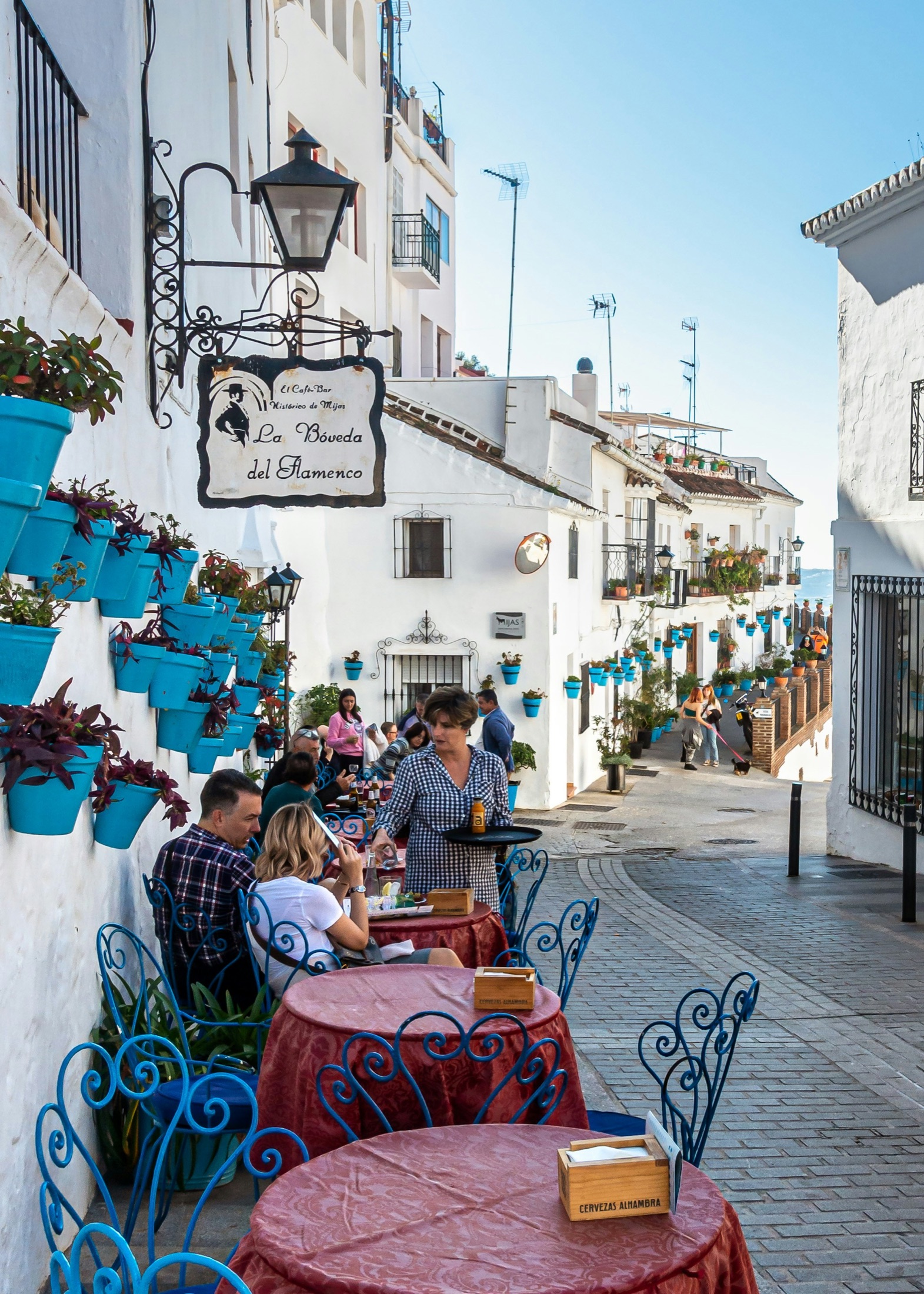
The Costa del Sol isn't a uniform coastline: Marbella and Puerto Banús are international and lively, Estepona and Mijas feel more Andalusian and affordable, and Sotogrande or Benahavís offer calm and space at a price. Málaga itself is a fully fledged city with a growing expat and digital-nomad community.
On our region pages you'll find the character, price level, and type of property for each place, so you make a well-considered choice instead of going on a first impression.
Health insurance and healthcare
If you're an EU pensioner receiving a state pension, form S1 gives you access to Spain's public healthcare, comparable to at home. If you're still working or self-employed, you build up that right through Spanish social security contributions once registered.
If you're not yet pension age and not working in Spain, you'll need private health insurance, also required for a residence permit. Many residents choose one regardless: private clinics on the Costa del Sol are well equipped, often speak English and sometimes Dutch, and waiting times are typically shorter than in the public system.
Cost of living in practice
Groceries and dining out are generally cheaper than in the Netherlands or Belgium, especially outside central Marbella and Puerto Banús. Energy and fuel prices are close to Dutch levels, with electricity sometimes higher in summer due to air conditioning.
Rental and property prices vary widely by area: an apartment in Fuengirola or Mijas is considerably cheaper than comparable square metres in Marbella or Puerto Banús. Our region pages show the current price per square metre for each area, so you know what's realistic for your budget.
Questions about your own situation?
We're happy to think along with you, without obligation and in your own language.
Read more
Other articles
Buying a house in Spain: the complete cost overview
Which taxes and costs come on top of the purchase price when you buy a property on the Costa del Sol? A complete overview, with a worked example.
Read the article →Applying for an NIE number in Spain: step by step
Without an NIE number you can't buy a house in Spain, open a bank account, or pay tax. Here's how to apply, from the Netherlands or in Spain itself.
Read the article →The buying process in Spain: from reservation to notary
Reservation contract, due diligence, arras contract, notary: the four steps between finding your property and getting the keys, explained.
Read the article →A mortgage in Spain as a foreigner: how it works
How much can you borrow as a non-resident, which documents does the bank ask for, and what changed under Spain's 2019 mortgage law? A practical overview.
Read the article →Annual taxes as a non-resident property owner in Spain
IBI, non-resident income tax, and wealth tax: which taxes do you pay every year once you own a property in Spain, and how much are they?
Read the article →Making a will in Spain: why alongside your Dutch will
A Spanish will alongside your Dutch one prevents delays and extra costs for your heirs. How the EU succession regulation works and what you need to arrange.
Read the article →